Fluid Evidence Before Firm Order: Assessing Coolant Control in UK Precision Supply
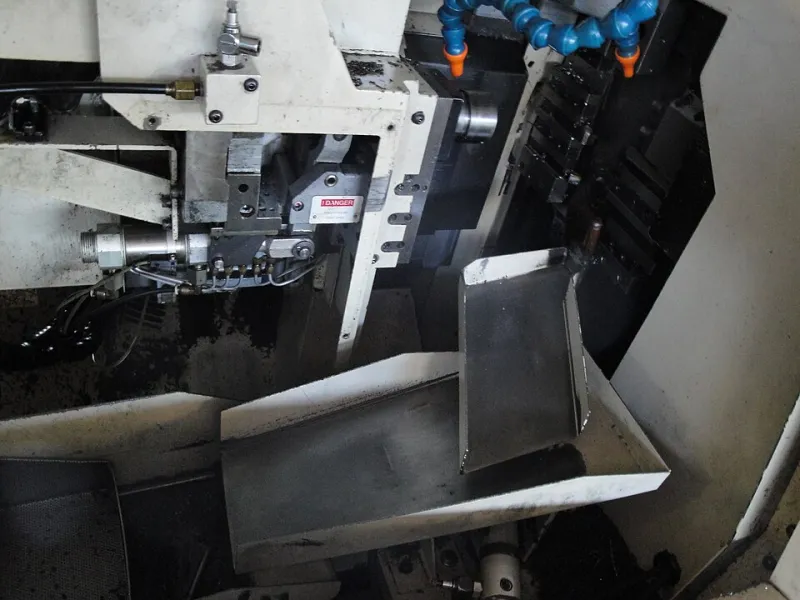
Photo: Three-quarter-ten, CC BY-SA 3.0, via Wikimedia Commons
A buyer assessing a precision machining supplier will usually examine machine lists, tolerances, inspection equipment and quality certificates. The sump is seldom on the agenda. Yet the fluid circulating through a machine is a process input with direct consequences for the part, the people who make it and the waste stream it creates. Coolant condition can influence corrosion risk, surface finish, dimensional consistency, tool life and operator exposure. It is not housekeeping. It is evidence of process control.
For UK buyers, the question is not which brand of coolant a supplier uses. It is whether the supplier can show that the fluid is managed as a controlled variable rather than left to drift between top-ups. That distinction belongs in supplier approval and, where appropriate, in the purchase order.
Why coolant belongs in supplier approval
Coolant sits at the intersection of several risks that buyers already care about. Poorly maintained fluid can leave residues that interfere with downstream finishing or coating. It can promote staining on sensitive materials. It can shorten tool life and disturb the thermal and lubricating conditions that help hold dimensions. It can also create mist, skin contact and odour issues that fall squarely within health and safety duties.
None of these risks is exotic. They are routine in machining environments. The point is that they are manageable, and the evidence of management should be available before a firm order is placed. A supplier that can produce concentration records, sump-change logs and microbial test results is demonstrating a level of process discipline that tends to show up elsewhere as well.
The evidence that matters
Concentration testing is the foundation. Most water-mix fluids require regular checks, whether by refractometer or titration depending on the product. The buyer does not need to prescribe the method. The buyer should ask who tests, how often, against what target range, and what happens when a result falls outside it. A log with no corrective action is a diary, not a control system.
Microbial control is the next layer. Dip slides, odour checks and biofilm inspection can reveal problems before they become a production or welfare issue. Biocide additions should be recorded and compatible with the fluid and the site's COSHH assessment. Sudden changes in fluid appearance, foaming or dermatitis complaints are signals that deserve a documented response.
Sump changes should be condition-based as well as calendar-based. A supplier should be able to say how often a machine is emptied, cleaned and recharged, and how that interval is adjusted for heavy-use machines or difficult materials. Residue control matters too. Rinsing and drying regimes, corrosion protection and compatibility with subsequent processes should be considered, particularly where parts are not cleaned immediately after machining.
What to put in the purchase order
A purchase order is not the place for a fluid specification unless the part genuinely demands one. It is the place to name the expectation. That might mean a requirement to maintain coolant within the supplier's documented control limits, to retain fluid-management records for the contract period, and to notify the buyer before changing fluid type or concentration strategy on a dedicated machine.
For higher-risk work, buyers may ask for fluid records at approval and periodically thereafter. The wording should be proportionate. The aim is not to audit every top-up. It is to make clear that coolant control is a named expectation, not an invisible background task. Where a supplier cannot provide basic evidence, that is useful information before the first cut rather than after a corrosion complaint.
Compliance is part of the commercial picture
In the UK, coolant management sits within the Control of Substances Hazardous to Health Regulations 2002. Suppliers should hold current safety data sheets, suitable COSHH assessments, exposure controls and appropriate personal protective equipment. Mist control, skin surveillance and training all form part of the picture. Buyers do not need to duplicate the supplier's legal duties, but they should be satisfied that the duties are being taken seriously.
Waste is the other half. Used coolant, swarf and contaminated containers require proper segregation and disposal under the duty of care. A supplier should be able to identify its authorised waste carrier and produce consignment evidence where required. If trade effluent is discharged to sewer, the relevant consent or agreement should be in place. These are not procurement technicalities. They are indicators of whether the fluid is being managed to the end of its life, not just at the machine.
A practical checklist for buyers
- Ask for the coolant management procedure, not just the product name.
- Confirm concentration testing frequency, target range and corrective-action records.
- Ask how microbial problems are detected and controlled.
- Review sump-change intervals and machine-cleaning records.
- Check residue-control measures for materials sensitive to staining or downstream finishing.
- Confirm COSHH assessments, safety data sheets and mist-control arrangements.
- Verify waste-carrier arrangements and trade-effluent status where relevant.
- Include a change-notification expectation where fluid changes could affect the part.
Coolant is a useful leading indicator because it is easy to neglect and hard to fake over time. A supplier with clean records, sensible limits and a clear response to out-of-band results is likely to be managing other process variables with similar care. For Brimic Engineering, that is the connection worth making: the sump may not appear on the drawing, but the evidence it generates belongs in the procurement file.