The Second Source Is a Filing Cabinet: Making Tooling Transfer a Purchasing Deliverable
When a precision component changes supplier, the paperwork usually travels well. The drawing, the purchase order, the material certificate and the inspection report can all be forwarded in a single email. What rarely travels is the tooling and process knowledge that made the part repeatable in the first place. For UK buyers, that gap is not an administrative inconvenience. It is the difference between a genuine second source and a name on a list.
The artefact and the assets behind it
Precision manufacturing is often described as if the drawing were the complete instruction. It is not. The drawing defines the destination; the route is made up of fixtures, CAM programs, probing routines, custom form tools, setup sheets, tool-life records and the accumulated judgement of people who have already made the part. Those assets are rarely listed in the sourcing documents because they are not part of the component. They are the means of production, and they usually belong to whoever built them unless the contract says otherwise.
That default matters most when work moves. A new supplier can quote from a drawing and still discover, after award, that the part cannot be made economically without the previous supplier’s fixtures or without a CAM program that has been tuned over several revisions. The buyer then faces a choice between paying for the assets to be recreated, accepting a longer and more expensive route, or discovering that the second source was never more than a commercial fiction.
Ownership is a contract term, not a conversation
Tooling ownership should be settled before the first order, not during an exit. The purchase order or a referenced tooling schedule should state who owns each asset, who may use it, and what happens when the relationship ends. This is especially important where the buyer has paid for tooling through piece price or an upfront charge. If the buyer has funded the fixture, the buyer should be able to take possession of it, or at least have a defined right to require its transfer, without a separate negotiation at a moment of maximum disadvantage.
The same discipline applies to data. CAM programs, post-processors, probing cycles and simulation models are not always the supplier’s to give away, particularly where software licences or third-party intellectual property are involved. A clear data-rights clause should distinguish between the supplier’s background know-how, the buyer’s part definition, and the process data generated for the buyer’s work. Without that distinction, a request for the transfer pack can stall on a legitimate licensing question that should have been resolved at award.
What belongs in a transfer pack
The transfer pack is the practical expression of the contract. It should be a named deliverable with a defined contents list, a format, a date and a responsible person. For most UK precision parts, the pack will include an asset register identifying fixtures, form tools and gauges; CAM programs in native and neutral formats where appropriate; probing routines and associated tolerance data; fixture and tool drawings; setup sheets; tool-life records; inspection programmes; revision history; and any special process instructions that sit outside the drawing.
Not every item will apply to every part. A simple turned component may need little more than a program, a tool list and a setup sheet. A complex prismatic part with bespoke workholding may need a substantial dossier. The point is not to create bureaucracy for its own sake, but to make the pack proportionate to the risk and to ensure that the receiving supplier can reproduce the process without relying on undocumented assistance from the outgoing one.
Escrow, access and version control
Where programs or models are held in software environments that the buyer cannot directly access, escrow or access rights deserve early attention. Escrow is often discussed in relation to software source code, but the principle applies equally to manufacturing data that is essential to a part’s continuity. The agreement should identify what is deposited, how often it is updated, who may release it and on what trigger. A deposit that has not been refreshed since the first article is of limited value after three years of process improvement.
Version control is the quieter half of the same problem. A transfer pack that contains a CAM program without the revision of the model it was cut from, or a probing routine without the tolerance set it assumes, can be more dangerous than no pack at all. The handover should therefore include a revision log and a simple statement of which drawing, model, program and inspection programme were in use for the last conforming production batch.
Fixtures and form tools: buy-back, not burn-down
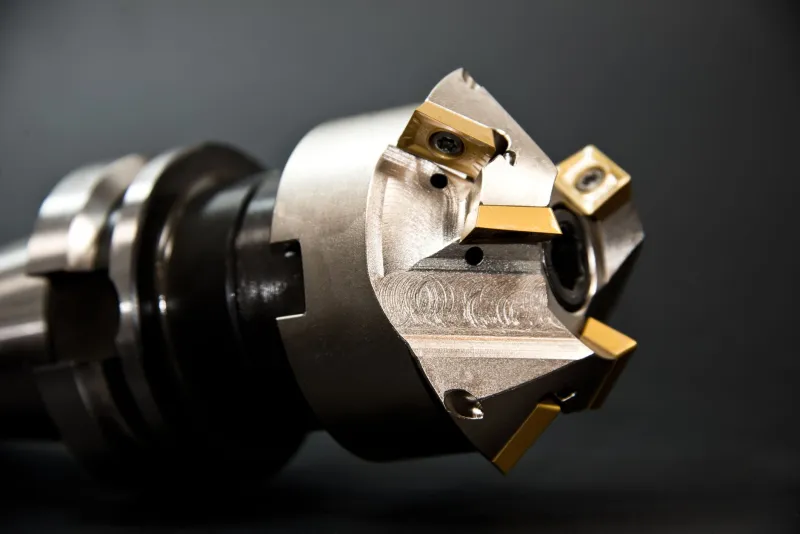
Bespoke fixtures and form tools are where transfer discussions most often become commercial. The outgoing supplier may have amortised the tooling into piece price and may see it as a sunk asset; the incoming supplier may be unwilling to pay for equipment it did not specify. A buy-back formula agreed at the start removes much of that friction. It can be based on written-down value, original cost less amortisation, or a fixed schedule. The important thing is that the formula exists before it is needed.
Where the buyer owns the tooling outright, the transfer pack should include a physical asset schedule with photographs, identification marks, storage conditions and calibration status where relevant. Where ownership is shared or unclear, the contract should say how the asset will be valued and transferred. Leaving the question open is not a neutral position; it simply transfers the negotiation to the least convenient moment.
The handover meeting that makes a second source real
Transfer should end with a witnessed handover, not a folder of files. The meeting should confirm the asset register against the physical items, review the revision log, agree open issues and set a trial batch. The receiving supplier should then make a conforming part from the pack, preferably with the outgoing supplier available only for clarification rather than instruction. If the new supplier cannot produce a conforming part without undocumented help, the transfer is not complete.
For UK buyers, this meeting is also the moment to test whether the second source is real. A supplier that has the assets, the data and a proven trial batch is a credible alternative. A supplier that has only a drawing and an optimistic quotation is a contingency on paper.
A checklist for UK buyers
- Does the purchase order or tooling schedule name the owner of fixtures, form tools, programs, probing routines and setup data?
- Is there an asset register with physical identification, condition and location?
- Are CAM programs and models supplied in agreed formats, with revision records and post-processor details?
- Are probing routines and inspection programmes included with their tolerance assumptions?
- Is escrow or access defined for data held in software environments the buyer cannot directly control?
- Is there a fixture and form-tool buy-back formula agreed before the first order?
- Are tool-life records and special process instructions part of the pack?
- Is a handover meeting a named approval gate, with a trial batch and first-off inspection?
- Are open issues logged and closed before final sign-off?
A second source is only as real as the assets that can move. In 2026, UK buyers reviewing precision supply should treat tooling transfer as a purchasing deliverable, not an exit negotiation. The part may be the artefact, but the process is the asset. If the contract does not say how the asset travels, the drawing will arrive at the new supplier alone.