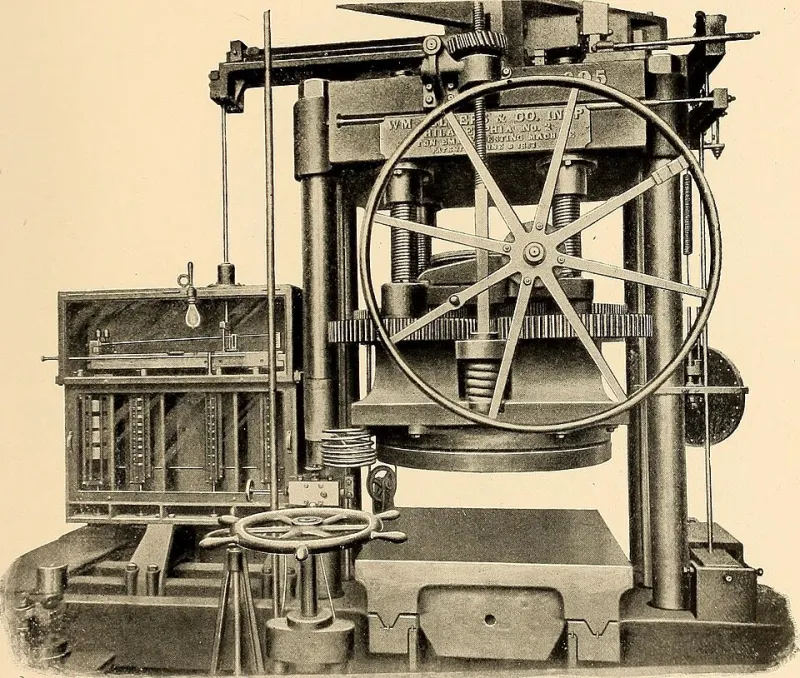
Ground Truth: What Buyers Should See Before a Precision Machine Earns Its Tolerance
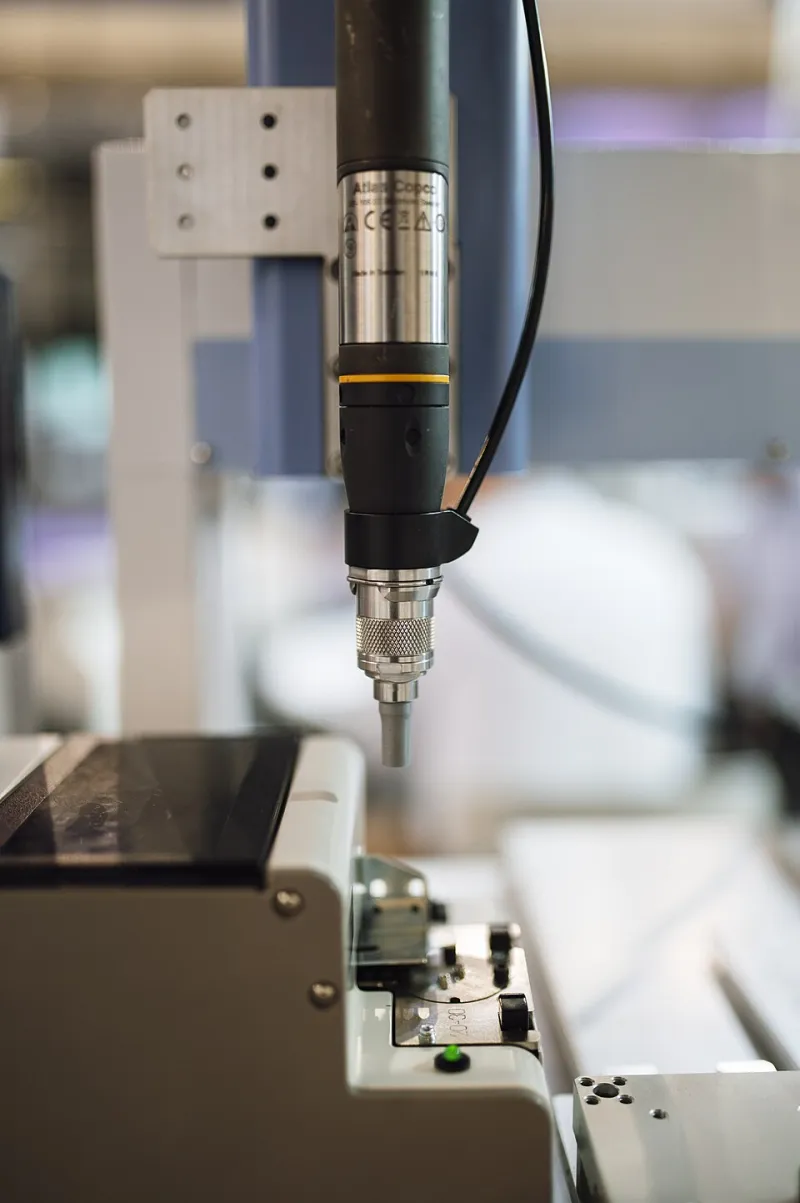
Photo: Shixart1985, CC BY 2.0, via Wikimedia Commons
Machine acceptance is often reduced to a calibration certificate and a test cut. Both are useful, but neither tells a buyer whether the machine can repeat its geometry next month, after the slab has settled and the neighbouring press has started its afternoon shift. In 2026, as UK suppliers add capacity, relocate equipment and bring work back in-house, procurement should treat installation as part of the evidence trail.
The floor is part of the machine's specification
Precision is a system property. The machine tool contributes its rigidity, its thermal behaviour and its control, but the floor contributes the reference. A foundation that deflects under load, a slab that transmits vibration from a forklift, or a grout bed that was never allowed to cure properly will all appear in the part eventually. A calibration record may still be valid as a record of an instrument response at a moment in time, yet it cannot certify the conditions under which that response will be repeated.
Buyers do not need to become structural engineers. They do need to require evidence from those who are. The practical question is not whether the supplier says the floor is suitable, but what assumptions sit behind that statement and who has signed them off.
Floor loading: ask for assumptions, not assurances
The first document to request is the foundation or floor assessment. It should state the machine mass, the expected dynamic loads, the anchor design and the load path into the building structure. Where the machine sits on an upper floor or a mezzanine, deflection under load matters as much as gross load capacity. A slab that is strong enough in the absolute sense may still flex enough to disturb alignment.
A useful assessment will also include the ancillary loads that are easy to overlook: coolant tanks, chip bins, fixture plates, pallets and personnel. In older UK industrial buildings, original drawings may be incomplete or may not reflect later modifications. If the supplier cannot produce a reliable record, the assessment should say so and explain what survey or inspection was used instead. A statement that the floor is suitable, without assumptions or calculations, is not installation evidence.
Vibration is a specification, not a nuisance
Vibration surveys are sometimes treated as an optional extra for sensitive metrology, but precision machining also depends on a quiet floor. The sources are mundane: compressors, road traffic, rail lines, forklifts, other machine tools and even the building's own services. A machine that is quiet at six in the morning may behave differently at two in the afternoon.
Ask for a pre-installation survey at the proposed location, with transducer positions, measurement period, frequency content and the criteria used to judge the result. If isolation mounts are part of the installation, ask for the commissioning record: the selected mounts, their load range, how they were installed and what was measured afterwards. A packed set of isolators in a crate is not a vibration control solution until it has been commissioned against the actual floor.
Levelling and grouting leave records
Levelling is not a one-off adjustment before the machine is switched on. It is a process with a sequence. The supplier should be able to produce a levelling log, a record of shims or grout, the grout product and batch, cure conditions and the anchor torque values. Where grout is used, the cure period and the re-levelling check afterwards should be documented.
These records matter because they close the gap between delivery and acceptance. They show that the machine was set against a known reference and that the reference was not disturbed by the installation itself. They also give the buyer something to compare against if the machine is later moved, adjusted or re-grouted.
Geometry after settlement
Settlement is normal. Unrecorded settlement is not. A machine can settle after installation as the foundation, grout and building structure come to terms with the load. The buyer should therefore ask for a post-installation geometry check at agreed intervals: after the initial cure or settling period, after the first production week and, where relevant, after a full thermal cycle.
The check should compare the machine's geometry against the baseline established at installation. It need not be an exhaustive metrology exercise every time, but it should be specific enough to reveal change. Level, straightness, squareness and spindle alignment are the usual candidates. If adjustment is made, the record should show what changed and why. This is the difference between a machine that has been installed and a machine that has been proven in its new location.
Site acceptance under production conditions
Factory acceptance testing has its place, but it is not a substitute for site acceptance. The site test should be carried out with the machine on its final foundation, with production services connected, with the intended fixture or workholding in place and with a warm-up routine that reflects normal use. Where the machine's performance depends on coolant or thermal stability, those conditions should be part of the test rather than an afterthought.
Calibration certificates should be read for scope as well as result. A certificate may confirm that an instrument was calibrated, but it does not by itself confirm that the foundation, isolation and installation are fit for the work. Buyers should ask what was calibrated, where, when and against what reference. UKAS-accredited calibration has a role, but it sits alongside installation evidence, not in place of it.
What to request in 2026
A practical installation dossier for a precision machine tool should include:
- the foundation or floor assessment, with load assumptions and anchor design;
- a pre-installation vibration survey and a post-installation verification report;
- levelling, grouting and anchor torque records;
- isolation commissioning records where isolation is specified;
- a post-settlement geometry check schedule with signed results;
- a site acceptance test carried out under production conditions;
- a relocation protocol that requires re-verification after any move.
These items should be named in the purchase order or supplier qualification pack, not left to the supplier's discretion. Where payment or retention is linked to acceptance, the release of that payment should depend on the dossier being complete. Procurement has a legitimate interest here because the alternative is to discover the gap later, when a tolerance drift is blamed on the material, the tooling or the operator.
Relocation is not a change of address
A machine that has been moved is not the same installation. The foundation is different, the vibration environment is different and the levelling baseline has been broken. Suppliers who relocate equipment, or buyers who bring work back in-house, should require a pre-move condition survey, a transport record, a re-installation record and a fresh geometry check. The original factory calibration may still be relevant to the machine, but it says nothing about the new floor.
The same discipline applies when a supplier adds capacity at a site the buyer has never visited. The machine may be identical to the one in the previous cell. The ground is not.
A calibration sticker is a receipt for an instrument reading, not a warranty of repeatability. The floor is part of the machine, and installation evidence is how a buyer knows which floor the tolerance is standing on.