Crates and Desiccant Are Not Admin: Writing Transit Protection into the Purchase Order
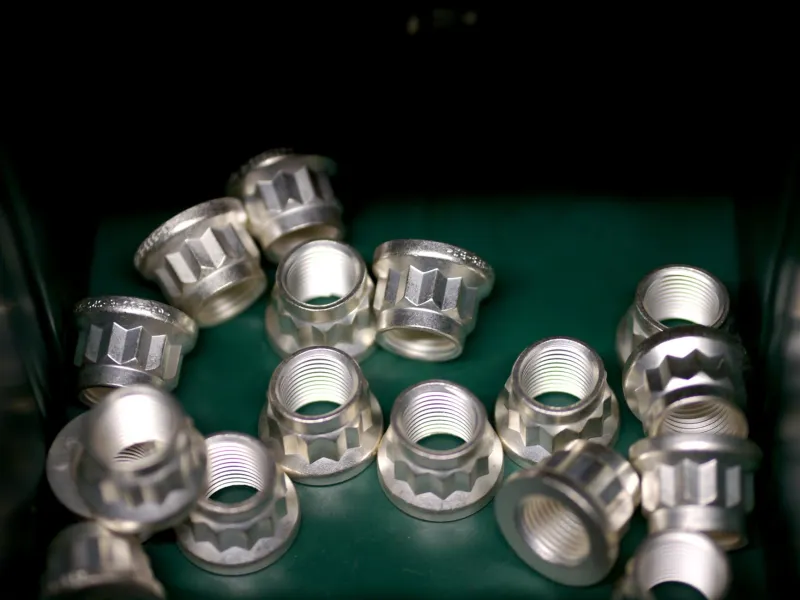
A precision component can pass every dimensional check in the supplier’s inspection room and still fail on the buyer’s goods-in bench. The failure may not be dimensional at all. It may be a handling mark on a sealing face, a bloom of corrosion inside a bore, a bag that was never sealed, or a mixed batch that arrived without a readable label. In each case, the manufacturing process was controlled; the journey between operations was not.
Packaging, preservation and transit protection are frequently treated as commercial housekeeping rather than engineering requirements. They are left to the supplier’s standard routine, which may be perfectly adequate for a general machined part and wholly inadequate for a precision one. For UK buyers sourcing machined components, the purchase order is the practical place to correct that.
The last unmeasured process
Between final inspection and use, a part passes through a sequence that few drawings describe: cleaning, drying, bagging, cushioning, palletising, loading, road transit, depot handling and unpacking. Each step introduces risk. Some risks are mechanical, such as impact or abrasion. Others are chemical, such as condensation or residual cutting fluid. Others are informational, such as loss of traceability when labels fall off or batches are consolidated.
The buyer is not paying for packaging in isolation. The buyer is paying for the part to remain conforming until it is needed. That distinction matters because it changes what should be specified. A generic instruction to pack suitably is not a specification. It is an assumption with a purchase order number attached.
What the buyer is actually buying
A useful starting point is to state the outcome rather than the method. The purchase order can require that packaging preserves cleanliness, surface finish, dimensional condition and material identity from the supplier’s final inspection through to receipt at the buyer’s designated site. That sentence does not dictate a particular box or bag, but it establishes that transit protection is part of the contract.
From there, the buyer can add the specific conditions that matter for the part. A component with a lapped face, a polished bore or a fine thread may need individual protection rather than bulk packing. A component with internal passages may need caps or plugs. A component made from a corrosion-sensitive material may need a defined preservation regime rather than a sheet of paper and a cardboard box.
Cleanliness and contamination
Cleanliness should be specified where it affects function or downstream processing. Residual cutting fluid, loose swarf, polishing compound or handling debris can compromise assembly, coating, welding or inspection. The purchase order should state the required condition and, where relevant, the cleaning method or acceptance check.
A practical clause might require components to be cleaned to an agreed specification, dried, and packed in clean, compatible material. It should also prohibit loose packing materials that can shed fibres or particles. For parts with critical surfaces, the buyer may require individual bagging and a defined handling method, including gloves where skin contact is a contamination risk.
The clause need not be elaborate. It must be clear enough that the supplier can price it and the buyer can audit it. If the requirement is unknown, that is a signal to resolve it before order placement, not after the first delivery.
Corrosion protection as a controlled condition
Corrosion protection is often assumed to be covered by a light oil film. For short journeys and benign conditions, that may be true. For longer storage, seasonal humidity, multi-drop distribution or international transit, it may not. UK buyers should specify the protection required, the storage duration it is intended to cover, and the inspection method on arrival.
Depending on the component and material, the specification may call for a defined preservative, vapour-phase corrosion inhibitor, desiccant, barrier bag or humidity indicator. The point is not to over-engineer every delivery. The point is to make the protection a controlled condition rather than an unexplained residue.
Where desiccant is used, the buyer can require a humidity indicator card visible without opening the barrier bag. Where a preservative is applied, the buyer can require confirmation of compatibility with subsequent processes. A coating that protects in transit but interferes with assembly is not a solution; it is a transferred problem.
Handling and mechanical protection
Precision parts are vulnerable to damage that leaves little visible trace. A burr rolled over on an edge, a ding in a sealing face or abrasion between two components can escape a casual inspection and appear later as a leak, a fit problem or a rejected assembly. Packaging should separate parts where contact is possible and cushion them where impact is credible.
For heavier components, the purchase order should address lifting points, pallet integrity and restraint. For delicate features, it should address individual protection and the maximum permissible stack height. For parts that are easily confused, it should prohibit mixed packing unless the packages are clearly segregated and labelled.
The supplier’s handling method should be proportionate to the part, not inherited from a different product family. A buyer who has specified the component’s critical characteristics should also specify the protection those characteristics require.
Labelling, traceability and the unboxing record
Labels are part of the inspection evidence. Each package should carry the part number, revision, purchase order number, quantity, batch or serial identity, date of packing and any special handling instruction. Where the supplier’s own identification is used, the buyer should confirm that it remains readable after transit and that it links to the inspection records.
A useful purchase-order clause requires packaging to maintain traceability down to the smallest unit the buyer needs to control. If a delivery contains multiple batches, they should be segregated. If a bag is opened at goods-in, the label should still be readable and the contents should still be identifiable.
The unboxing inspection is the buyer’s final check on the supplier’s packaging performance. A short, disciplined routine is usually enough: photograph the outer packaging, check seals and indicators, verify labels against the purchase order, inspect for contamination or corrosion, and record any deviation before the parts enter stores. If the packaging has failed, the buyer should quarantine the delivery rather than assume the parts are unaffected.
Clauses that survive contact with a supplier
Packaging requirements work best when they are written as auditable clauses rather than general aspirations. A purchase order might include the following:
- Packaging shall preserve cleanliness, surface finish, dimensional condition and material identity from final inspection to receipt at the buyer’s site.
- Components shall be cleaned, dried and packed in clean, compatible material; loose swarf, cutting fluid residue and fibre-shedding materials are not acceptable.
- Corrosion-sensitive components shall be protected by an agreed method, with desiccant and humidity indication where specified.
- Critical surfaces shall be individually protected; mixed batches shall not be packed together unless clearly segregated and labelled.
- Each package shall be labelled with part number, revision, purchase order number, quantity, batch identity, packing date and handling instructions.
- The supplier shall notify the buyer of any deviation from the agreed packaging method before despatch.
These clauses do not replace a drawing. They complement it. They also give the supplier a fair opportunity to price the requirement and to raise a query where the part needs something different.
A small specification with a long reach
Packaging is easy to overlook because it arrives at the end of the process. In practice, it governs whether the work done earlier still counts. For UK buyers of precision components, the purchase order is the natural place to make that governance explicit. Specify the condition to be preserved, the protection to be applied, the information to be carried and the inspection to be performed. The part is not truly delivered until it arrives usable.